North Georgia winters are mild compared with the mountains to our north, but they are more than cold enough to damage tree bark, and the damage often does not become obvious until the tree leafs out in spring. Two culprits account for most winter bark injury: sunscald and frost cracks. Both are worth understanding, because both are largely preventable.
The signs of sunscald
Sunscald sounds like a summer problem, but it happens in winter. On a cold, sunny day the low sun warms the bark on the south and southwest side of the trunk, waking the tissue underneath, and then the temperature plunges after sundown and that active tissue is killed by the sudden cold. The result is patches of sunken, discolored, cracked, or peeling bark, almost always on the sunny side of the trunk. It is most common on young trees and on thin-barked species that have not yet developed a protective outer layer.
The facts about frost cracks
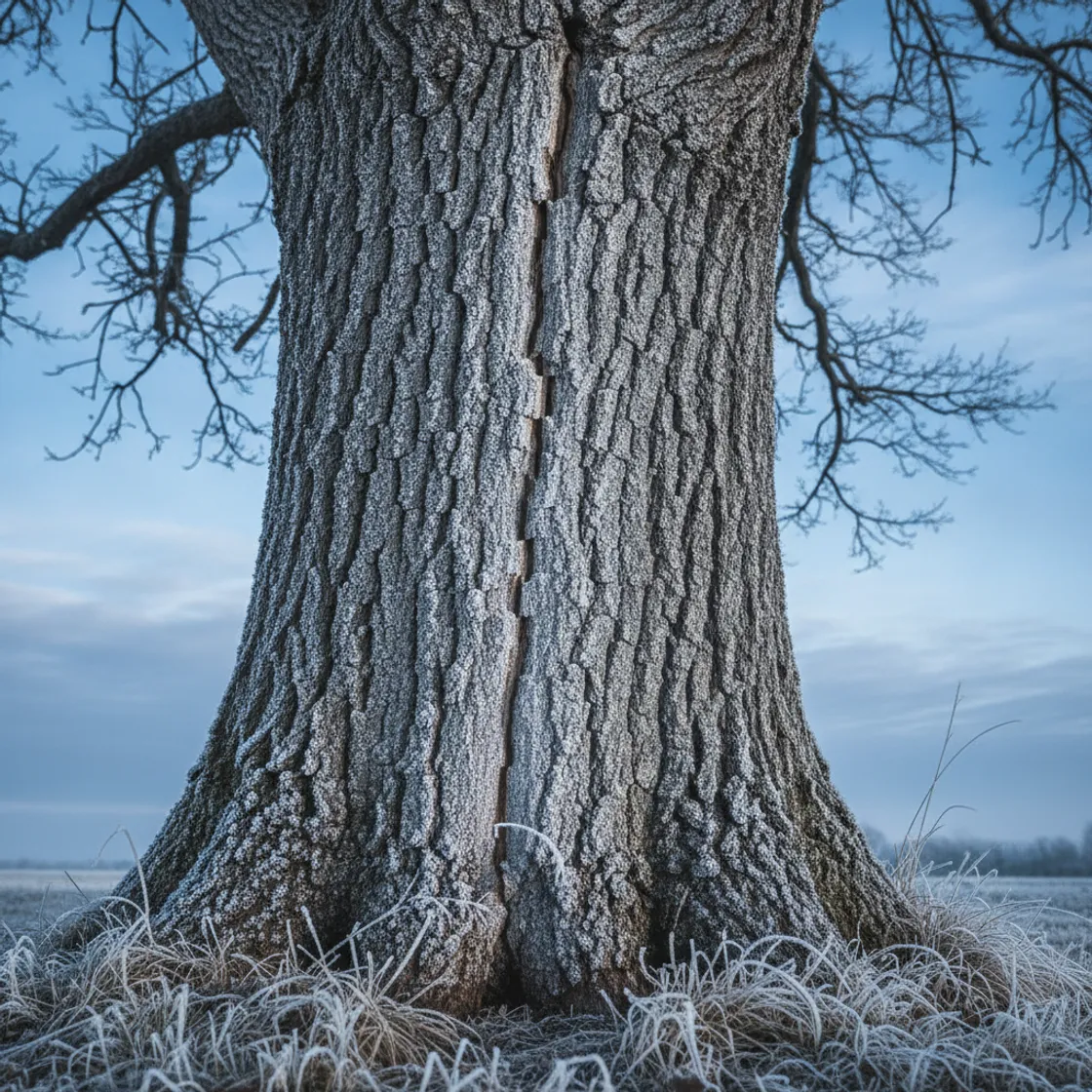
Frost cracks are the long vertical splits you sometimes find running up a trunk. They form when a sharp drop in temperature makes the outer wood contract faster than the inner wood, and the trunk splits under the stress, sometimes with an audible crack on a very cold night. The split may close up again as the wood warms, only to reopen the next cold snap, and each cycle can widen it. A frost crack is not usually fatal, but it is a wound, and a wound is an open door for decay and disease.
Why it matters
On their own, sunscald and frost cracks rarely kill a tree outright. The trouble is what comes through them. A wound in the bark is an entry point for the fungi, bacteria, and insects that cause the more serious problems, so winter bark damage today can become a canker or a decay pocket a few years from now. That is why it is worth spotting the damage, keeping an eye on it, and helping the tree seal it over.
Protecting vulnerable trees
A few simple steps prevent most winter bark damage, especially on young and thin-barked trees:
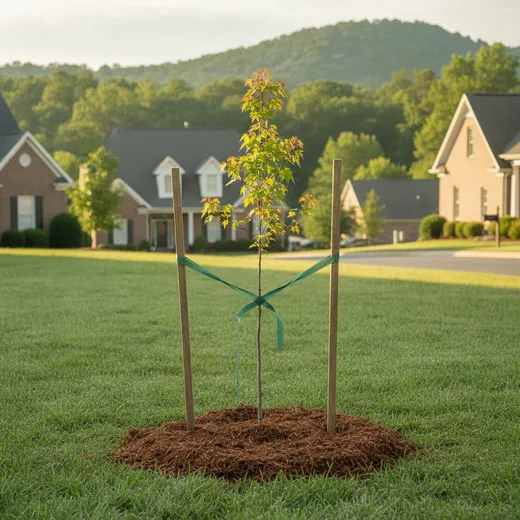
- Wrap the trunks of young or thin-barked trees with a light-colored tree wrap for their first few winters, removing it in spring so it does not girdle the tree.
- Keep trees well watered going into winter, since a well-hydrated tree resists cold stress better.
- Maintain a ring of mulch to moderate soil temperature around the roots.
- Avoid heavy late-season pruning that leaves fresh wounds going into the cold.
How Engram's Tree Service can help
Winter bark damage is usually manageable when it is caught early, and our certified arborist can tell you whether a crack or a scald is cosmetic or the start of something that needs attention. If a wound has opened the door to decay, we can advise on care or, where needed, pruning. As spring arrives and you walk your trees, reach out for a free estimate if anything looks wrong.