Metro Atlanta storms leave behind a yard that looks like a job to tackle right away. But storm-damaged trees are full of hidden dangers, and the first hours after a storm are among the most dangerous. A little caution now prevents the injury that turns a bad day into a much worse one.
Treat every downed line as live
This is the one that hurts people. A fallen tree very often brings a power line down with it, and a downed line can be energized even when the power is out and even if it is not sparking. Assume every downed line, and anything touching it, a branch, a fence, a puddle, is deadly. Stay well back, keep children and pets inside, do not touch the tree or anything near the wire, and call your utility to report it. Nothing in the yard is worth the risk of a live line.
Beware hanging and broken branches
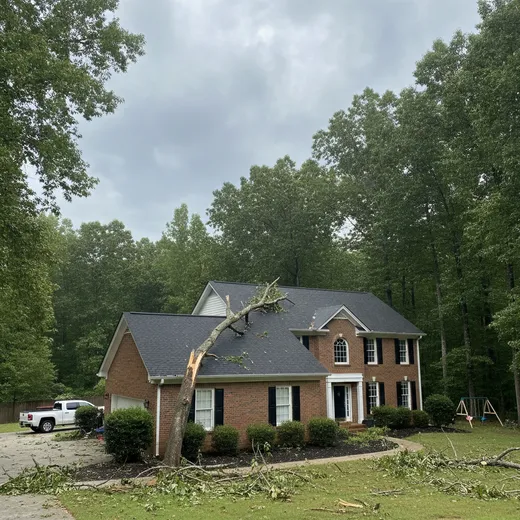
Look up before you walk under a damaged tree. Storms leave branches partly broken and hung up in the canopy, and these hangers can drop at any moment, with no wind and no warning. A limb that looks lodged and stable can let go the instant you step under it or bump the tree. Stay out from under storm-damaged canopies, and treat any limb caught overhead as a hazard to be removed by a professional, not something to shake loose.
Keep clear of uprooted trees
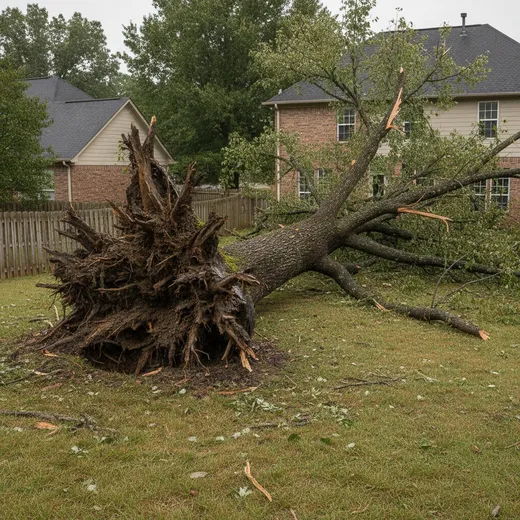
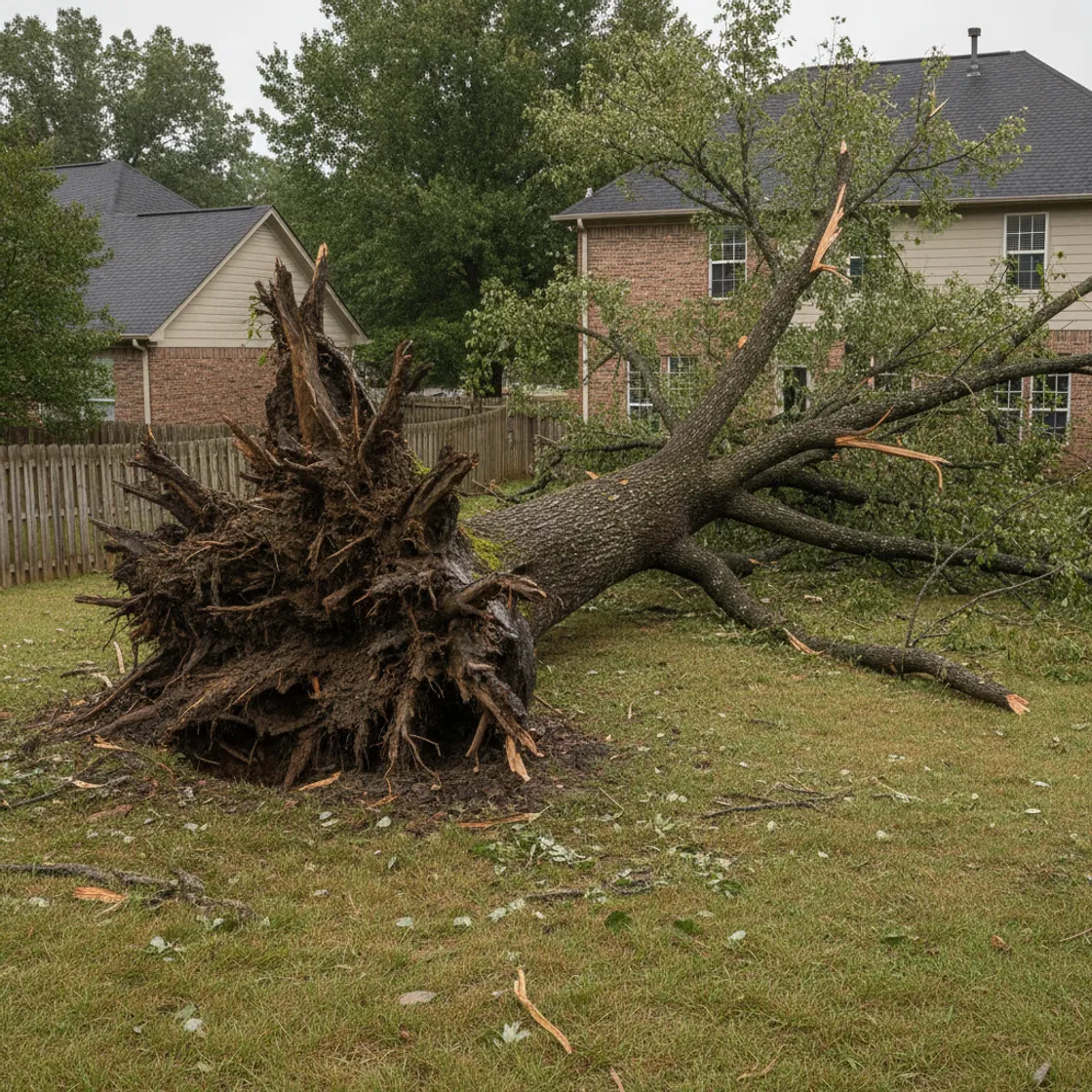
A tree that has partly uprooted is a loaded spring. The root plate, the mass of roots and soil torn up on one side, can weigh a great deal, and a partly uprooted tree can settle back or drop the rest of the way suddenly, and the root plate can slam back into its hole. Never stand in the fall path, never climb on a leaning or uprooted tree, and keep clear of the base. What looks like it has come to rest may only be paused.
Do not do the tree work yourself
The most dangerous storm cleanup is the chainsaw work. Storm-damaged trees are full of stored tension: limbs bent under load, trunks pinned against something, wood that will kick or spring the moment it is cut. Add a chainsaw, often a ladder, and sometimes a nearby power line, and it becomes some of the most hazardous work there is. This is not the time to borrow a saw and improvise. Clear small debris on the ground if it is safe, and leave anything under tension, overhead, or near a wire to a trained crew.
How Engram's Tree Service can help
We have cleared storm damage across metro Atlanta for more than 25 years, and we know how to read where the danger is before we cut. If a storm has left you with a downed, leaning, or hung-up tree, get everyone safe, stay clear of any lines, and call or text our 24-hour line. We will handle the parts that are not safe for a homeowner to touch.